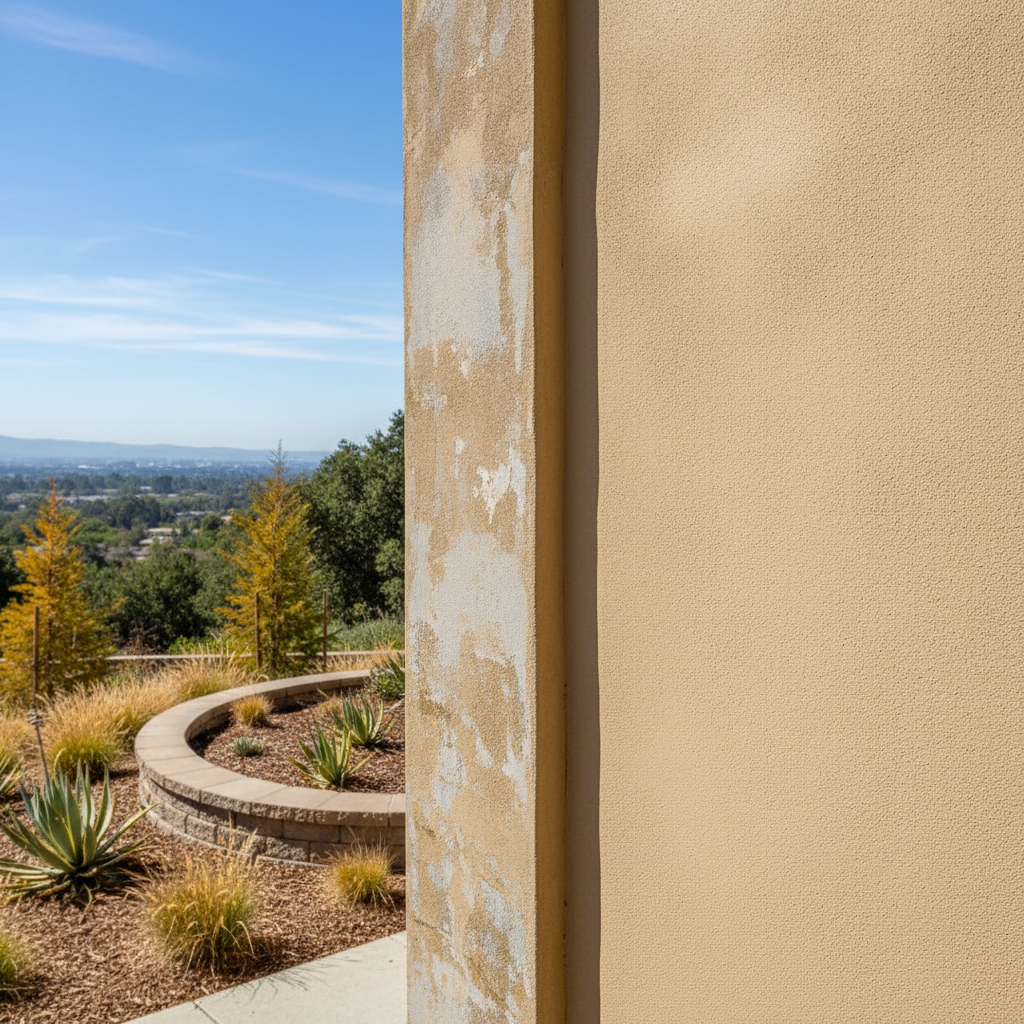
Alright, let's talk stucco. If you're thinking about putting new stucco on your house or tackling a big repair here in Redwood City, you've probably heard about a couple of options: the traditional three-coat stuff and what folks often call 'one-coat' stucco. It can get confusing fast, and honestly, a lot of contractors won't even explain the difference properly. But you really need to know, especially with our local conditions.
What's Traditional Three-Coat Stucco?
This is the classic stuff, the method that's been around for ages. When I say 'three-coat,' I mean it literally. You start with a scratch coat, which is the first rough layer, applied directly over your lath – that's the mesh that holds everything to the wall. Then comes the brown coat, which is thicker and gets leveled out to create a smooth, even surface. Finally, you get the finish coat, which is the color and texture you actually see. Each of these layers has to cure properly, so it's a process that takes time, usually a few days between coats, sometimes longer depending on the weather.
It's made from cement, sand, lime, and water. Once cured, it's a hard, durable material, and it breathes pretty well, meaning it can handle some moisture vapor moving through it. Think of a lot of the older homes in areas like the Mount Carmel neighborhood; many of those have traditional stucco that's really stood the test of time.
And What About 'One-Coat' Stucco?
Now, 'one-coat' is a bit of a misnomer because it's usually two coats: a base coat and a finish coat. The big difference is the base coat is much thicker than a traditional scratch or brown coat, and it often incorporates synthetic materials like acrylics and fibers. This makes it more flexible and less prone to cracking than traditional stucco. The finish coat is typically an acrylic-based product, which is also flexible and comes in a huge range of colors and textures. It's applied over the base coat, and because it's acrylic, it acts as a much better moisture barrier than a traditional cement finish.
The main advantage here is speed. Since the base coat goes on in one go and cures relatively quickly, the whole process is faster than three-coat. It's also lighter, which can be a factor on some structures.
Cost Comparison: What's Cheaper Upfront?
Generally speaking, one-coat stucco systems tend to be a bit more expensive upfront per square foot than traditional three-coat stucco. The materials for one-coat systems, especially those acrylic finishes, often cost more. However, because it's faster to install, the labor costs can sometimes balance that out a bit. But don't expect a massive discount just because it's 'one-coat.' For Redwood City Stucco & Plastering, we're talking about quality work either way, and quality materials cost money, right?
Durability & Maintenance: Which Lasts Longer?
This is where it gets interesting, especially for our climate. Traditional stucco is incredibly durable. It's hard, impact-resistant, and if it's installed right with proper weep screeds and flashing, it can last for decades. The downside is it's more rigid. If your house settles a bit, or if there's any movement, you're more likely to see hairline cracks. These aren't usually structural issues, but they can let water in if not sealed, and they definitely affect appearance. Maintenance usually involves patching cracks and repainting every 5-10 years.
One-coat stucco, with its synthetic components, is much more flexible. This means it's far less likely to crack from minor building movement or temperature fluctuations. The acrylic finish coats are also very resistant to fading and often come with longer warranties on color retention. They're also more water-resistant on the surface. The trade-off is that if it does get damaged (say, a hard impact), repairs can sometimes be a bit trickier to blend seamlessly than with traditional stucco, though a skilled contractor can absolutely do it.
Appearance: Is There a Difference?
For the average homeowner, you might not notice a huge difference in appearance once the finish coat is on. Both can achieve a wide variety of textures and colors. However, traditional stucco tends to have a more 'matte' or natural mineral look, while acrylic finishes on one-coat systems can sometimes have a slightly more uniform or 'plastic-y' sheen, especially when new. This isn't a bad thing, just a subtle difference in aesthetic. The color choices for one-coat systems are virtually endless, and they tend to hold their color better over time without chalking or fading as much as traditional paint on cement stucco.
My Recommendation for Redwood City Homes
Given our climate – we get some decent rain in the winter, and while we don't have extreme temperature swings, houses do settle – I generally lean towards the benefits of a well-installed one-coat stucco system for most residential applications today. The increased flexibility means fewer cracks over time, which translates to less maintenance and better long-term moisture protection for your home. That's a big deal. The superior moisture resistance of the acrylic finish is also a huge plus, especially for homes that might be exposed to more direct rain, like those on the west-facing slopes of the hills.
Traditional stucco is still a fantastic product, especially if you're trying to match an existing historical look or prefer that classic, hard finish. But for new installations or full re-stuccos where long-term, low-maintenance performance is key, the one-coat systems often come out ahead. Just make sure whoever you hire, whether it's Redwood City Stucco & Plastering or someone else, knows what they're doing with proper flashing and drainage details. That's critical no matter which system you choose.