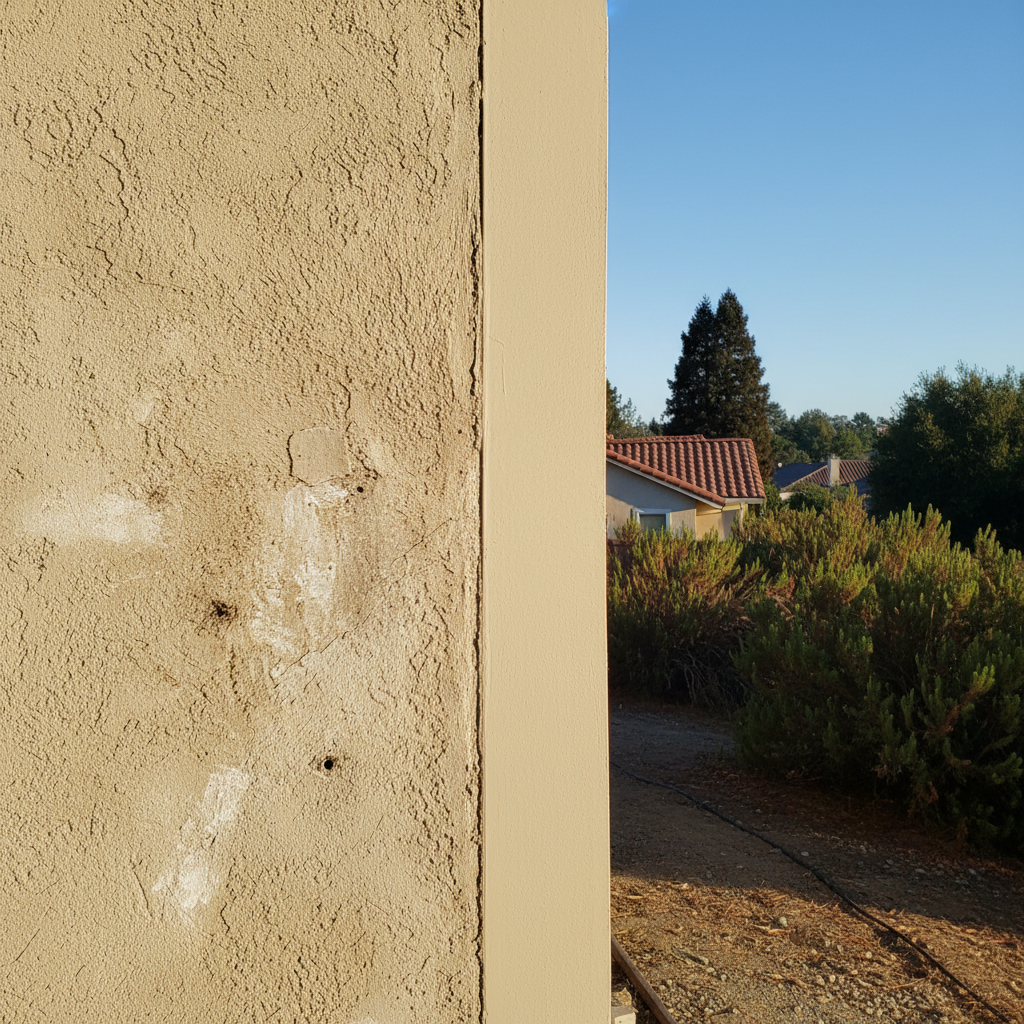
Alright, Redwood City homeowners, let's talk stucco. If you're noticing cracks, bubbling, or maybe just an outdated look on your home, you're probably facing a big decision. Do you try to put new stucco right over the old stuff, or do you just go for a full tear-off, getting right down to the sheathing? It's a really common question, honestly, and there isn't one simple answer. But I've seen a lot of stucco work in this town — everything from the older homes in Mount Carmel to the newer builds near the Bay — so I can tell you what you really need to think about.
We're going to look at these two main ways of doing things: Stucco Overlay (which some folks call Re-stucco) versus a Full Stucco Tear-Off and Replacement. I'll give you the facts about how much they cost, how long they last, what kind of upkeep they need, and how they'll actually look on your home. We'll keep our specific California weather conditions in mind, too.
Stucco Overlay (Re-stucco): Is It the "Easier" Way?
This approach means you're putting a fresh layer of stucco right on top of your existing stucco, assuming it's structurally sound. That sounds pretty good, right? Less mess, less time involved. And sometimes, it really is a perfectly good choice for your home.
Cost
Generally speaking, an overlay is going to be less expensive upfront compared to a full tear-off. You save a lot on the labor for demolition and also on the costs for getting rid of all that old material. Here in the Bay Area, re-stuccoing over existing stucco (as long as the foundation underneath is in good shape) can run you about $6-$10 per square foot. That's a pretty big difference when you compare it to a full replacement.
Durability
Here's the thing you need to remember: how long an overlay lasts depends entirely on the condition of your current stucco. If your old stucco has widespread issues, like delamination — that's when it's pulling away from the wall — or if there's significant moisture damage, or even big structural cracks, an overlay is really just a temporary fix for a much bigger problem. The new layer will only be as strong as whatever is underneath it, which makes sense. But if the existing stucco is solid, a proper re-stucco job, especially with a polymer-modified base coat and fiberglass mesh, can actually add a lot of strength and make it last longer. (And that's not a small thing.)
Maintenance
Taking care of an overlay is pretty much like taking care of new stucco. You'll still need to deal with cracks as they show up, and you might want to think about repainting every 7-10 years if you don't go with an integral color finish. The key here is that if you don't fix those underlying problems first, you might find yourself doing repairs more often down the road.
Appearance
An overlay can really make your home look a lot better. You can change up the textures, going from a rough sand finish to something smooth like a Santa Barbara style. You can also mix color right into the final coat, which means it won't peel or chip like paint would. However, if your old stucco has a very pronounced or uneven texture, getting a smooth finish over it might need some extra work to make sure the old texture doesn't show through.